Half-Monster, All Business: How the Creature Hunter Became Hollywood's Most Bankable Antihero
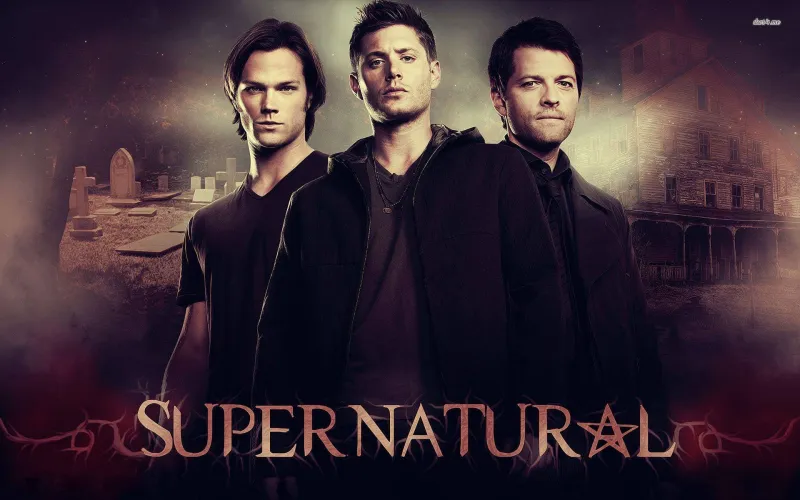
Photo: supernatural warrior antihero dramatic cinematic lighting action pose, via wallpapers.com
Somewhere between 1998 and right now, Hollywood figured out that the most interesting monster in any supernatural story isn't the creature — it's the person hunting it. Specifically, the person who is also kind of the creature. The liminal warrior. The thing that lives between worlds. The guy or gal who could eat you for dinner but has chosen, for complicated psychological reasons we'll spend three seasons exploring, not to.
This is the creature hunter archetype, and it has quietly become one of the most reliable formulas in modern entertainment. Let's talk about how it got here.
The Template: Wesley Snipes in a Trench Coat
You cannot have this conversation without starting with Blade. The 1998 Marvel adaptation starring Wesley Snipes didn't just launch a franchise — it essentially wrote the instruction manual for every supernatural assassin character that followed. Half-vampire, half-human, all attitude. The visual language alone was a revelation: the all-black tactical gear, the sword that caught light like it was auditioning for its own movie, the sunglasses that communicated 'I have seen things that would destroy your sanity' without a single line of dialogue.
Blade established the core formula. The creature hunter must be of the world they're fighting. They carry the enemy's power but resist the enemy's nature. This internal conflict isn't just character depth — it's the entire engine of the story. Blade's need for a serum to suppress his vampire bloodlust isn't a plot inconvenience. It's a ticking clock that makes every fight personal.
The film also introduced something that's easy to overlook: the creature hunter as a fashion icon. Blade's aesthetic was immediately imitated, from video games to anime to every Hot Topic display case from 1999 to 2004. The look communicated competence, danger, and a kind of tragic cool that resonated with American audiences who, it turns out, really wanted their heroes to be deeply, visibly damaged.
The Expansion Era: TV Gets Weird and Wonderful
While Blade was making its theatrical impact, television was quietly building its own creature hunter mythology. Buffy the Vampire Slayer had already been running since 1997, and its genius was inverting the archetype entirely. Buffy Summers was not brooding or monochromatic. She was blonde, funny, and shopping at the same mall as everyone else — which made the weight of her calling exponentially heavier.
Then came Angel, the spinoff that leaned hard into the noir detective framing that would become another key branch of the creature hunter family tree. A vampire with a soul, running a supernatural detective agency in Los Angeles. This sounds insane typed out plainly, but it worked because the show understood something crucial: the creature hunter's psychology is inherently about guilt, atonement, and the question of whether you can outrun what you are.
By the mid-2000s, Supernatural arrived and proceeded to run for fifteen seasons by essentially treating the creature hunter archetype as a lifestyle brand. Sam and Dean Winchester weren't supernatural themselves (mostly, for a while, until they were, it's complicated), but the show expanded the emotional vocabulary of the genre enormously. Monster hunting as family trauma. Monster hunting as blue-collar labor. Monster hunting as the only identity you've ever had and the prison you can't escape.
The Costume Design Evolution: Gear as Character
One of the most underappreciated elements of the creature hunter's evolution is how the visual design of these characters has tracked with broader cultural shifts. Blade's sleek, minimalist tactical aesthetic reflected the late-90s obsession with cool efficiency. The Winchester brothers' flannel-and-leather working-class wardrobe was a deliberate rejection of that glossiness — these were guys who lived out of a car and couldn't afford to be stylish.
Moon Knight, introduced in his 2022 Disney+ series, represents the current apex of creature hunter costume design. The white suit and crescent moon motifs are visually arresting in a way that feels almost operatic, a deliberate contrast to the dark aesthetics that dominated the genre for two decades. The design communicates something specific about Marc Spector's character: this is someone who has stopped hiding. The creature hunter as spectacle, as performance, as a man so fractured internally that his external presentation has become almost theatrical compensation.
Weapon design has followed a similar trajectory. Early creature hunters carried practical tools — stakes, holy water, UV flashlights. Modern iterations carry weapons that are essentially character statements. The Mandalorian's Beskar spear. Moon Knight's crescent darts. The elaborate, personalized arsenals in The Witcher. The weapon is no longer just a tool; it's a biography.
The Psychology: Why We Can't Stop Watching
The creature hunter archetype endures because it externalizes a very specific American anxiety: the fear of being defined by your worst impulses. Blade fights his bloodlust. Geralt of Rivia is feared by the very people he protects. Moon Knight can't trust his own memories. These characters are trapped in a permanent negotiation with their own nature, and that negotiation is endlessly compelling because most of us feel some version of it.
There's also the competence factor, which is deeply satisfying in a chaotic world. The creature hunter is, above all else, good at what they do. They have specialized knowledge, refined skills, and a tactical intelligence that makes them effective against enemies most people can't even perceive. In an era of ambient uncertainty, watching someone be genuinely, ruthlessly competent at a difficult and dangerous job is almost therapeutic.
Where the Archetype Goes Next
The creature hunter is currently experiencing a streaming-era renaissance. The Witcher, Moon Knight, Midnight Mass, What We Do in the Shadows, and a dozen other properties are actively expanding and interrogating the formula. The trend lines point toward greater psychological complexity, more diverse protagonists, and an increasing willingness to question whether the hunter is actually the hero of the story.
The most interesting development is the archetype's growing self-awareness. Modern creature hunters increasingly know they're the creature hunter. They've read the genre. They understand the tropes. And the best current writers are using that meta-awareness to push the character into genuinely new emotional territory.
From a leather trench coat in 1998 to a dissociative Egyptian moon god avatar in 2022, the creature hunter has never been more complicated, more varied, or more watchable. Whatever comes next, the genre's central tension — the monster who fights monsters, the thing between worlds — shows absolutely no signs of losing its grip on American audiences.
And honestly? We wouldn't have it any other way.