Sun's Out, Fangs Out: How Vampire Mythology's Biggest Weakness Keeps Getting Them Wrecked Across Every Major Franchise

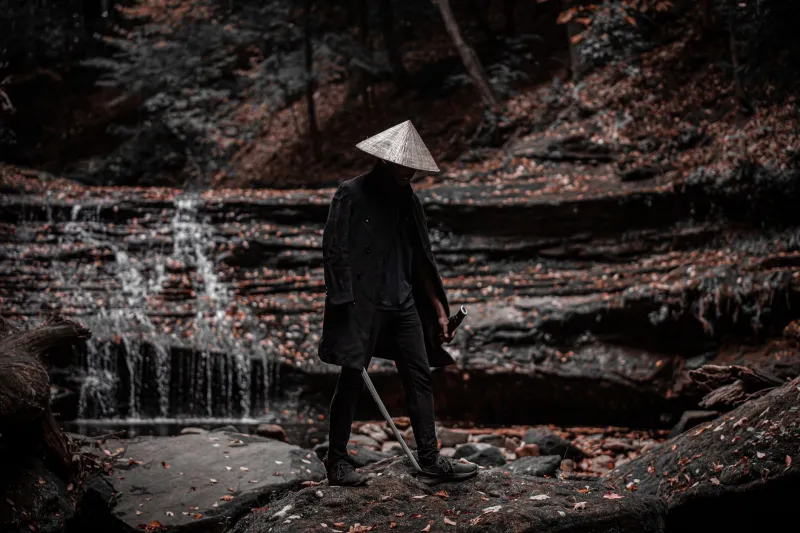
Photo: vampire in sunlight versus ninja silhouette dramatic fantasy battle, via cdn.pixabay.com
Let's be honest about something that vampire apologists have been dodging for years: the most powerful supernatural predators in the history of human mythology are functionally useless for roughly half of every single day. That's not a character flaw. That's a scheduling conflict. And while vampires have spent centuries cultivating an air of terrifying mystique, ninjas have spent that same time quietly becoming the most genre-flexible combatants in all of fiction — operating in rain, snow, daylight, digital hellscapes, and at least three different anime timelines simultaneously.
This isn't a hit piece. It's an autopsy.
The Daylight Clause Is a Structural Problem, Not a Plot Device
Here's the thing about vampire mythology that writers keep trying to paper over with lore patches: the sun vulnerability isn't just a weakness, it's a load-bearing weakness. It dictates where vampires can live, when they can fight, who they can recruit, and how any competent enemy can simply... wait them out. Ninjas don't have a "no fighting between 6 a.m. and 7 p.m." clause buried in their ancient codes. They have schedules. Preferences, even. But not hard mechanical limits baked into their biology.
When a storyteller drops a ninja into a narrative, that character can credibly show up anywhere. Rooftop chase at noon? Done. Desert ambush at high altitude with maximum UV exposure? Annoying, but survivable. A vampire in the same scenario is either dead, sparkling (we don't talk about that era), or protected by a lore exception that the audience has to accept on faith.
Every lore exception erodes dramatic stakes. And dramatic stakes, ironically, are the one thing vampires are supposed to be good at.
Marvel Figured This Out and Then Immediately Complicated It
Marvel's relationship with vampires is a case study in institutional ambivalence. Blade — easily the most culturally significant vampire-adjacent character in the MCU pipeline — works precisely because he's the guy who solved the daylight problem. He's half-vampire, which means he got the strength, the speed, and the bloodlust, but skipped the part where he combusts at sunrise. The franchise essentially admitted that a full vampire protagonist was mechanically unworkable and invented a workaround.
Meanwhile, Marvel's ninja tradition — flowing through Daredevil's Hand, through Shang-Chi's lineage, through the entire shadow-organization infrastructure of the MCU's street-level storytelling — operates without a single sun-related footnote. Matt Murdock fights crime in Hell's Kitchen on a Tuesday morning if he has to. Nobody's checking the almanac before a Hand assassin throws a sword.
The pattern is clear: when Marvel wants a vampire to be truly effective, they give them ninja-adjacent mobility. When they want a ninja to be scary, they just... let them be a ninja.
Anime Treated This Debate Like a Final Exam and Vampires Barely Passed
Japanese animation has produced some of the most sophisticated vampire mythology in modern fiction, and it has still consistently flagged the daylight problem as the central dramatic engine of the genre. Hellsing built an entire secret organization around managing Alucard's operational limitations. JoJo's Bizarre Adventure spent multiple arcs watching characters exploit vampire sun-weakness as a primary combat strategy — and those arcs featured some of the most creative problem-solving in shonen history precisely because the vampires were so constrained.
Naruto, by contrast, handed the ninja archetype a toolkit so expansive that characters routinely fight across dimensions, inside other people's consciousnesses, and through the fabric of spacetime itself. The ninja framework in anime is essentially a blank check for power escalation. The vampire framework keeps bouncing against the same overdraft limit.
Demon Slayer is particularly instructive here. The demons (functionally vampires in everything but name) are terrifying, ancient, and nearly impossible to kill — and they still lose, systematically, to teenagers with swords and breathing techniques, largely because those teenagers figured out how to weaponize sunlight. The entire cosmology of that series is built on the vampire framework's central mechanical flaw.
Gaming Is Where the Narrative Gap Becomes a Canyon
Video games are brutal to vampires in ways that other media can obscure. When you're the one holding the controller, mechanical limitations stop being atmospheric and start being annoying. Castlevania is beloved precisely because you're usually playing against Dracula, not as him. The Vampire: The Masquerade series is fascinating and deeply playable, but it requires extensive systemic scaffolding — the entire Masquerade concept, the clan politics, the haven system — just to make an immortal predator feel like a viable protagonist across a full day-night cycle.
Ninja games don't need that scaffolding. Sekiro, Ninja Gaiden, Tenchu — these games drop you into any environment, any time of day, and the core fantasy remains completely intact. The ninja archetype in gaming is modular. It fits. Vampires in games are almost always either the boss encounter or the character class that requires the most rules-lawyering to make functional.
The Adaptability Gap Is the Real Story
What this franchise survey actually reveals isn't just that vampires have a sun problem — it's that ninjas have evolved into something vampires never managed to become: a genre-neutral archetype. The ninja aesthetic has absorbed cyberpunk (cyber-ninjas everywhere, no notes), fantasy (shadow assassins in every major RPG), sci-fi (stealth operatives in approximately one hundred space operas), and even comedy (because a ninja showing up unexpectedly is inherently funny, and that flexibility is itself a superpower).
Vampires, for all their charisma and their excellent coats, remain tethered to Gothic horror's original framework. Every time a writer tries to yank them into a new genre, they're dragging that whole infrastructure with them — the coffins, the sun rules, the invitation clauses, the garlic discourse. It's a lot of luggage for a creature that's supposed to be the apex predator.
Ninjas travel light. That's the whole point.
The Verdict
Vampires are iconic. They're seductive, terrifying, and they've generated more compelling fiction per capita than almost any other supernatural archetype in human storytelling. Nobody's taking the fangs away.
But in the specific arena of franchise adaptability — of which supernatural combatant works across the most contexts, genres, and mechanical constraints — the ninja archetype isn't just winning. It's winning by a margin that would embarrass any creature that's had literal millennia to figure out a better game plan.
The sun rises every morning. It has never once apologized for this. And somewhere in that unbroken, ancient rhythm, a ninja is already three moves ahead of whatever undead mastermind thought darkness was a long-term strategy.